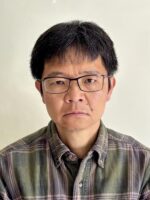
Ming-Sung Kuo

Dr Ming-Sung Kuo is a reader in law at University of Warwick in the United Kingdom where he teaches public law and international law. He received his LLB and first LLM from National Taiwan University. Following a one-year law clerkship at Taiwan’s Constitutional Court, he started his academic journey as a PhD student at National Taiwan University and continued to pursue his doctoral studies in the United States where he earned an LLM and a JSD from Yale Law School. Before joining Warwick in 2010, he conducted postdoctoral researches at European University Institute as a Max Weber Fellow and Max Planck Institute for Comparative Public Law and International Law. He has held visiting appointments at University of Turin, National University of Singapore, University of Copenhagen, National Taiwan University, and Academia Sinica in Taiwan.

Dr Kuo’s research interests include legal and constitutional theory, comparative constitutional law, and public international law. He has published in leading journals, including International Journal of Constitutional Law (I·CON), European Journal of International Law, and Oxford Journal of Legal Studies. His research on judicial remedy, ‘Between Choice and Tradition: Rethinking Remedial Grace Periods and Unconstitutionality Management in a Comparative Light’, 36 UCLA Pacific Basin Law Journal 157 (2019), has been cited by the Supreme Court of Canada in R. v. Albashir (2021 SCC 48). He has contributed to online outlets such as EJIL: Talk!, IACL-AIDC Blog, I•CONnect, Verfassungsblog, and The Diplomat, on issues of constitutional democracy and international law concerning Taiwan and beyond. He currently serves as an I•CONnect columnist for 2006.

Dr Kuo received the 2020 I·CON Best Paper Prize for his article ‘Against Instantaneous Democracy’, 17 I·CON 554 (2019). He is awarded the 2025 Prize for Scholarly Excellence in Constitutional Studies by The Constitutional Studies Program at The University of Texas at Austin.

Contact: mk11286@nyu.edu

Research Project

Articulated Governance: The Constitutional Project of Progress. Theories of constitutionalism seem to be thriving as scholars extend the gene pool of constitutions under examination. Yet the health of constitutional remains to be determined. On the one hand, as various designations such as illiberal constitutionalism, authoritarian constitutionalism, socialist constitutionalism, and Islamic constitutionalism suggest, it seems as if constitutionalism is just another term for political regime and can only be seen in its distinct incarnations. On the other hand, constitutionalism is increasingly suspected of having allied itself with neoliberalism and blamed for causing social injustice and the general malaise today. Constitutionalism seems to be everything and everywhere, only to see its old appeal fading. Against this intellectual backdrop, I aim to shed light on theories of constitutionalism by bringing its political underpinning – the constitutional project of progress – to the fore in this ongoing project. I have two goals. The first is to discover the progressive – not in the sense of linear movement in history – character of constitutionalism in the project of constitutional governance aimed at political freedom in a society where power is to be constituted. I will look into the underlying institutional structure of governance under the constitutional project of progress in which the state and society are reflexively articulated to each other in a multistage decision-making process. In this way, the current literature can be interrogated for its partial representations of constitutionalism – under which constitutionalism is either an empty shell that is open to any political system or a reactionary ideology collaborating with market forces in a neoliberal order. Second, I aim to investigate the existential challenge facing the progressive constitutional project of articulated governance today. By bringing to light the little-noticed relationship between constitutionalism and its assumed order of time and space, I will examine how processes of social acceleration and deterritorialization are undermining constitutional governance.